
L.Dulmaazul: I aim to leverage global project experience for mongolia’s future
 B Shurenchimeg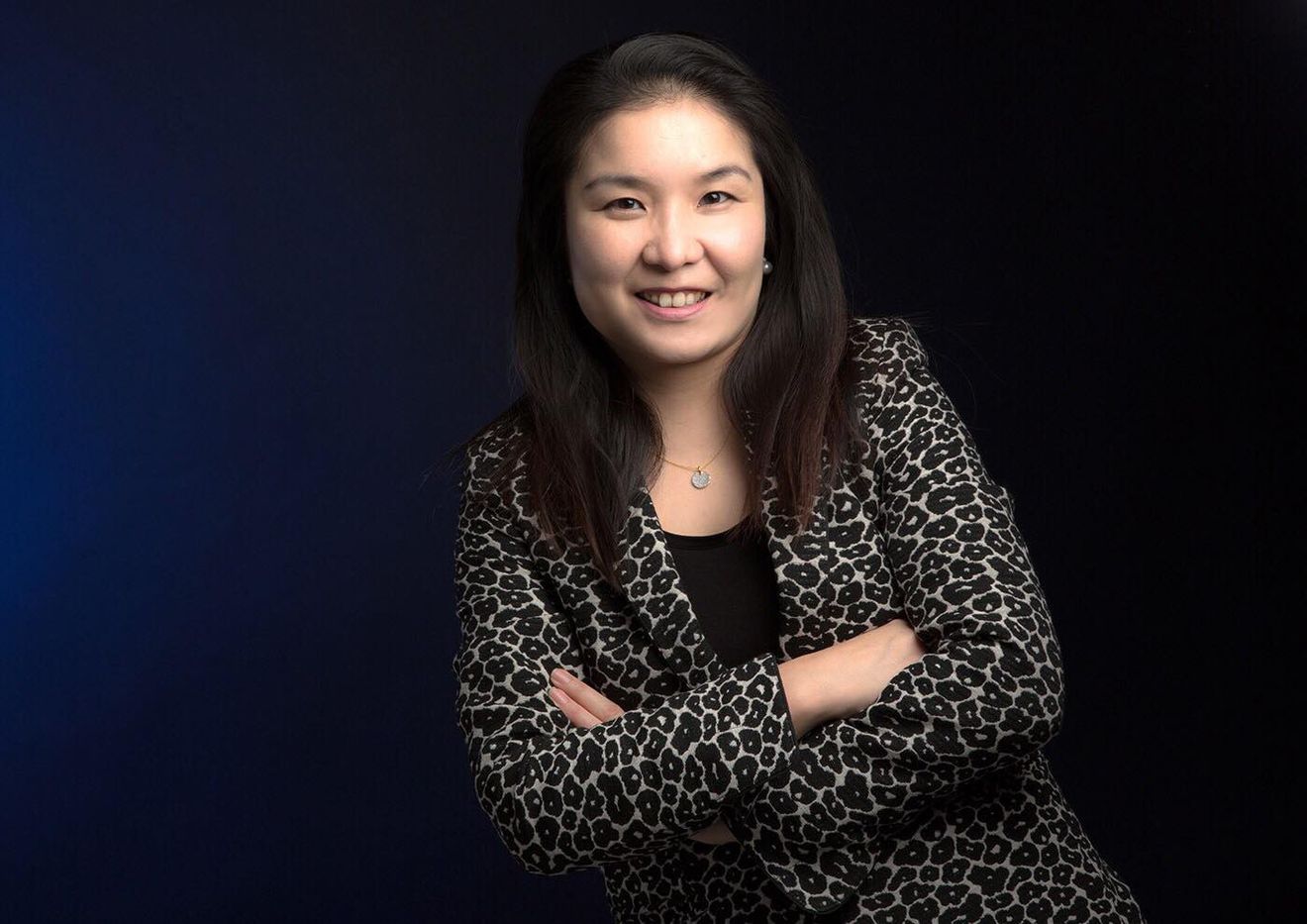
L.Dulmaazul is a highly educated professional. She studied in the Czech Republic, Japan, and the United Kingdom, specializing in economics, finance, and business administration. Fluent in Czech, Russian, English, Japanese, and Mongolian, she has 15 years of experience in banking and finance across Tokyo, Singapore, and London. Of those, 12 years were spent at a major London-based bank, where she was responsible for large-scale international infrastructure projects. Although she lived, studied, and worked abroad from an early age, Mongolia was always close to her heart. For Dulmaazul, Mongolia has always been home. That is why she decided to dedicate herself to the country’s development and to contribute to building a better future here. She could have continued to live comfortably in developed countries, in her comfortable London home, with high pay and satisfaction, but she chose instead to return home country full of traffic congestion, air pollution, frustrations, and challenges — because Mongolia is what matters most.
-You’ve been back in Mongolia for a year now. How has it been for you to settle here after so many years abroad?
-It has been wonderful to resettle in my home country. For me, it wasn’t a sudden decision. For over ten years I had been coming back regularly, and in the past 4–5 years, I found myself here more and more often. Eventually, both my work and personal life became centered in Ulaanbaatar. Finally, I brought my son here and enrolled him in primary school once your child starts school, you truly put down roots.
Workwise, life has become extremely busy. I’ve been immersing myself in Mongolia’s development priorities, policies, and financing needs, and I see just how much work is ahead. I’ve been thinking a lot about how I could contribute to the country’s development, and I decided to focus on mobilizing finance for Mongolia’s clean energy sector. It’s an area I care deeply about, and I could clearly see how much investment is needed.
At the level of government ministries, agreements and MoUs are actively being signed, and I have also been working to strengthen the role of local banks. Since returning, one of the concrete results has been advancing significant financing from a major European investment bank.
We are now at the stage of preparing an MoU, which would open up a major source of funding for Mongolia’s development. I am proud to see progress in bringing such investment to my country.
-That’s a great news. I think Mongolia needs the foreign investment to develop itself. In which sectors will this investment be directed?
-Globally, countries are undergoing a green transition, and vast amounts of investment are being channeled into energy, especially renewable energy. In this context, the financing we are working to attract will be focused primarily on Mongolia’s energy sector and clean energy transition. The key is to bring in investment at the right time, to retain it, and to direct it toward building the country. That’s why I’ve been actively working to attract banks and investors to Mongolia.
-Could you briefly share your educational background?
-I completed my secondary education in Prague, the Czech Republic. I studied at Charles University in Prague, and later earned my bachelor’s degree at the Tokyo University of Foreign Studies in Japan. In 2012, I completed a Master’s in Finance at the University of Oxford, and in 2022, I completed an MBA at Oxford as well. I consider myself fortunate to have studied in Mongolia up until the 3rd grade. Even though I spent many years abroad, my foundation was built here, and thanks to that I’ve never forgotten my language.
-You once dreamed of traveling the world and working internationally. How did that dream come true?
-Yes, that was my dream to travel, to see how countries develop, and to contribute to that development. After graduating in Japan and speaking several languages, I had opportunities with major companies. My first job was with Toyota, when they opened a plant in the Czech Republic. I was among the very first management employees to open the branch, and within a year, the factory grew to 500 people. That was an incredible learning experience for a young graduate. I later joined PwC in Tokyo, where I worked in business strategic advisory. With 800 employees, the firm specialized in helping clients develop new businesses, structure financing, and secure investment. I moved to London, joining SMBC, one of Japan’s largest banks.
There I was initially responsible for Eurasian projects, overseeing billions of dollars in financing every year. The projects ranged from energy and oil infrastructure to airports and transport. Among them were landmark projects such as the Siberia 2 Gas Pipeline and Sakhalin 2, as well as the new terminal at Sheremetyevo International Airport in Moscow. Each time I travel through that terminal, I still feel proud of the work I contributed. I continued working on financing of Al Shuaibah 1 & 2 IPPs with combined capacity of 2.6GW and 5GW Solar Scheme in Saudi Arabia and so on. Later, I was assigned to cover the Sub-Saharan region and Middle East region, where I worked on major projects in South Africa, Saudi Arabia, Oman, Bahrain, Tanzania, Angola, Namibia, and Kenya.
I helped deliver projects in uranium mining in Namibia, power generation in Tanzania, renewable energy in South Africa, water treatment, hospitals, and waste management in the Middle East. At times, I traveled to five countries in a single week.
-You have achieved your dream, working and traveling internationally. When did you begin reconnecting with Mongolia professionally?
-I worked at the SMBC London office for 12 years. The bank opened its Mongolia representative office in 2012, which is when I began working on Mongolian projects. This was also when Oyu Tolgoi was launched and the Development Bank of Mongolia was established. Working on Mongolia’s major projects gave me deeper insights into the country’s development challenges.
Having accumulated so much international experience, I realized my remaining ambition was to focus my skills on Mongolia. Every time I worked on a project connected to Mongolia, my heart beat faster.
Among the projects that advanced were Oyu Tolgoi my bank was one of 14 international lenders, contributing $200 million — as well as financing packages for local banks such as DBM, Khan Bank, and TDB.
-What projects are you focusing on now in clean energy?
-Since 2012, I’ve been mobilizing financing for renewable energy in Mongolia. My first initiative was a geothermal feasibility study to supply heating to schools and kindergartens in Tuv province. I also met with major Mongolian companies to explore renewable opportunities. That project began quite unexpectedly from London, I discovered Mongolia’s National Renewable Energy Center and reached out directly to its director, Mr. Osgonbaatar. I told him: “I have access to financing for clean energy projects I’d like to collaborate.”
Not long after, I flew to Ulaanbaatar, and our first joint work was a geothermal pilot. I also remember the incredible enthusiasm of Mongolian companies at that time. I met with leaders from MCS, MAK, and others sometimes as late as 11 p.m. or even midnight because everyone wanted to explore renewable opportunities. Those long days showed me that Mongolia had both the resources and the ambition; what was missing was financing.
That realization became the foundation of my long-term mission: to mobilize international capital for Mongolia’s clean energy transition. Later, I returned to Mongolia full-time and began working with private sector partners to implement projects and attract financing. In recent years, I’ve been focused on building the hydrogen market.
I worked on Mongolia’s first hydrogen pilot project, which received Japan’s first-ever hydrogen grant for an overseas project. This project is being implemented at Oyu Tolgoi. Hydrogen is the fuel of the future it produces no emissions, no pollution, and can replace gasoline. If Mongolia develops the right policies and partnerships, I believe we have the potential to become a hydrogen exporter in the future. But beyond the project itself, I’ve worked with Mongolian experts to prepare a draft national hydrogen policy, which is now awaiting approval. An office under the President has already been created to coordinate hydrogen strategy. If adopted, this will give Mongolia the legal and institutional base to attract large-scale financing.
Importantly, Mongolia has abundant brown coal reserves, which the world no longer funds for conventional power generation. By applying new technologies to convert coal into hydrogen, we could create a future export industry.
In my view, Mongolia has the potential to become a hydrogen exporter to the region within the next decade but it depends on getting the policies and partnerships right today.
-How do you see the future of Mongolia’s energy sector?
-Coal is still a cheap energy source, but international financing for coal has already dried up. Since Mongolia could not build new coal plants when financing was still available, we now have no choice but to move toward a green transition. Mongolia now has a unique opportunity to leapfrog directly into a green transition. What we need is a comprehensive energy strategy looking out to 2040–2050.
Mongolia has enormous resources, and if we manage them wisely, the future can be very bright. Our southern neighbor is one of the world’s largest markets, and if we align well with them, Mongolia can gain significant economic benefits from energy exports. With good management and sound policies, development could come sooner than we think.
-You also worked as an infrastructure advisor to the UK government. What was that experience like?
-From 2019, I served on the advisory team for the UK government’s major infrastructure projects. Every year, the UK invests £600 billion in infrastructure, half from government resources and half mobilized from the private sector. The advisory team develops the structures that make these projects bankable, ensuring investor confidence. That experience gave me a deep understanding of how to attract private investment into public projects.
Roughly half of this comes directly from the government, while the other half is mobilized from private investors. Our role was to design project structures that would make investments bankable and attractive to global financiers. For example, a project might require that a certain share of its financing mix include Treasury-guaranteed bonds.
That small adjustment gave investors the security they needed to commit billions into long-term infrastructure projects.
It was a unique and practical education in how public and private capital can be combined at scale. That experience has been invaluable for me in Mongolia. Here, I see both tremendous opportunities and the need for stronger professional project teams and clear structuring at the very beginning of projects.
In the UK, projects only moved forward once professionals had finalized the structure and planning; in Mongolia, too often we begin without that preparation. If Mongolia applies more disciplined structuring, international investors will have the confidence to engage, and our energy transition will accelerate faster than expected.
-And what about your current role in Mongolia? What differences do you see between how Mongolia and the UK approach major projects?
-The UK is a common-law country. Much of business and international law is conducted under English law. When the UK decides to implement a major project, the professional project team gets involved first on structure and planning. When professionals develop the structure, the project moves forward cleanly and correctly. I currently serve as a special Advisor to the Deputy Prime Minister on energy reform.
One of the main challenges I see is that Mongolia often lacks professional project teams and clear structures at the early stages of development. Without that, projects don’t progress smoothly. But I believe Mongolia is entering a new phase. International investors are beginning to look at us differently, and some of the world’s largest players are expressing interest. We cannot afford to miss this opportunity. My goal is to share the lessons I’ve learned from working on infrastructure projects around the world, and to ensure that Mongolia can capture this historic moment.
